
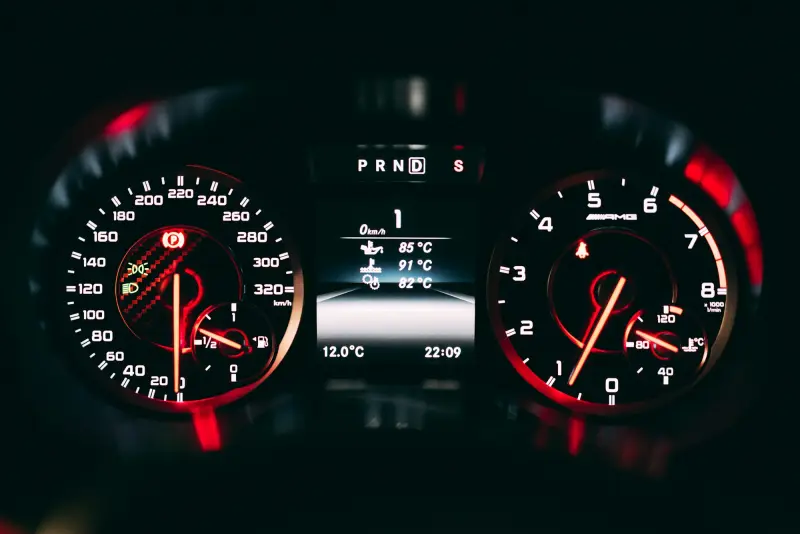
Warning lights are your vehicle’s way of telling you something has changed. Knowing which ones need immediate action — and which mean “book it in soon” — can save you a breakdown or a much bigger bill.
The colour tells you the urgency
- Red — a potentially serious problem. Stop as soon as it’s safe to do so and check your handbook.
- Amber or yellow — something needs attention. You may be able to continue carefully, but get it checked soon.
- Green or blue — information only, such as lights or cruise control being on.
Always check your vehicle’s handbook: symbols and meanings vary between manufacturers.
Lights you should never ignore
Oil pressure
Usually shaped like an oil can. Low oil pressure can damage an engine quickly. Stop safely and switch off.
Engine temperature
A thermometer symbol, often red. Overheating can cause serious engine damage. Stop safely and let the engine cool — don’t open a hot coolant cap.
Brake system
Can indicate low brake fluid or a brake fault. Brakes are safety-critical, so get it checked before driving further.
Flashing engine management light
A steady engine light means a fault has been recorded. A flashing one often indicates a misfire that could damage the catalytic converter — reduce speed and get it checked promptly.
Common amber lights
- Engine management — a fault has been stored. A diagnostic check will show where to start.
- DPF — the diesel particulate filter is filling up. See our guide to the DPF warning light.
- Glow plug (diesels) — if it stays on or flashes after starting, there may be a fault.
- ABS or traction control — the normal brakes should still work, but those safety systems may not.
- Tyre pressure — check and inflate the tyres to the correct pressure.
Why a code reader isn’t the whole story
Cheap code readers can show a fault code, but not always the cause. The same code can have several possible causes. Proper diagnosis combines the codes with live data and testing — which is how you avoid paying for parts you didn’t need.
This article is general guidance. Every vehicle is different — for advice on yours, call 07714 508420.